By John Valentik, MS, CSCS, NASM-PES, FMS
Raise your hand if you want a 6-pack!!! ‘Core’ training is probably one of the first things you think of when considering how to get to a defined mid-section. This week’s article is going to shed some light on this topic in addition to debunking a few; which I’ll start with right now. Abs, my friends, are kitchen muscles. Meaning you can do 1,000 crunches a day, but if you don’t make some healthy modifications in the kitchen, you’ll have a harder mid-section surrounded by fluff versus the 6-pack you’re after. With Paige being the family nutrition expert, or RD for short, I’m going to stick to how we can effectively train our core and cover why it’s important for more than just feeling good in a bathing suit.
Think of your core as a fishing rod or a credit card, not a brick or piece of concrete. Fishing rods, for example, hold lots of tension while also allowing for pliability. Credit cards are also hard, yet flexible, and can allow for bending and twisting. Where the problems arise are when these ranges of motion are taken to extremes. Lucky for us, our bodies will communicate that something is wrong much sooner than a snapped fishing rod or credit card!
Our cores serve multiple purposes. While it serves as a connection and transfer of force between your upper and lower body, it also maintains balance and posture. Most people think of our core and think 6-pack or scientifically, rectus abdominis. But there are many other muscles involved that make up more of a cylinder covering your front, sides, and back. Taken a step further is the muscles connecting below and around your hips. This whole structure is then referenced as the LPHC, or lumbo pelvic hip complex.
Now that some of the technical jargon is behind us, how do we train it? I want to preface that this post is not meant to bash some of our traditional exercises like sit-ups, russian twists, and side bends. This is more to get you thinking of the functionality of such movements. When in sport or everyday life do you mimic a sit-up or russian twist? Answer: probably not often. When in sport or everyday life do you see a person moving in an athletic position, carrying groceries, or rotating to swing a baseball bat or golf club? The difference is that these more common movements are generally in a taller posture than what a lot of the traditional core exercises will place you in. Sit-ups also aren’t the greatest for your back, which is why the military is moving away from them. Check out our Instagram post from earlier in the week to get a better idea.
In addition to some of the options provided above, consider the following when training your core. Notice how each movement is maintaining a neutral spine and emphasizes tension in the mid-section.
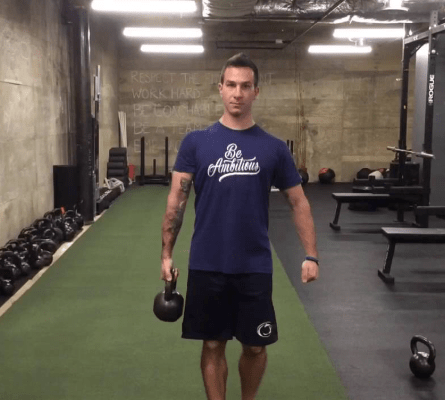
One Arm Farmer Carries: Engage core, maintain a tall posture and walk from one length of the room to another. Maintain a firm grip on the kettlebell while keeping tension in the off-hand.
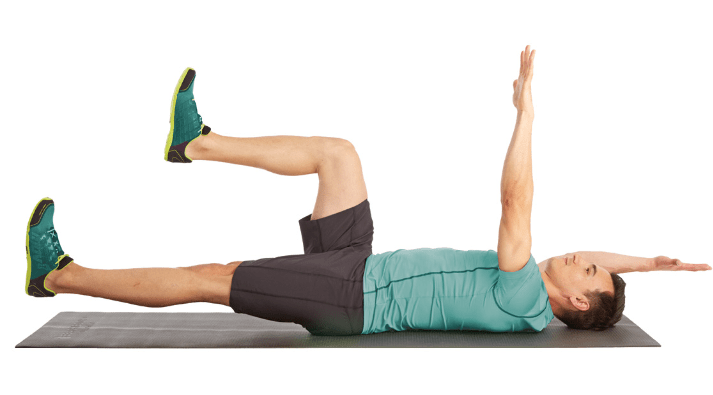
Deadbugs: Keeping your entire back flat and belly button driven into the floor, reach your opposite arm and leg away from another. Return to start and alternate sides.
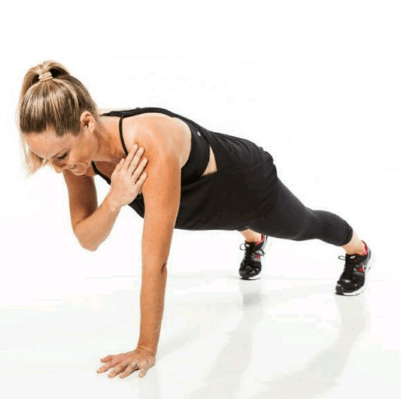
Shoulder Taps: With feet slightly wider than hands, engage your core while tapping your right hand to opposite shoulder. Come down with control and alternate to your left.
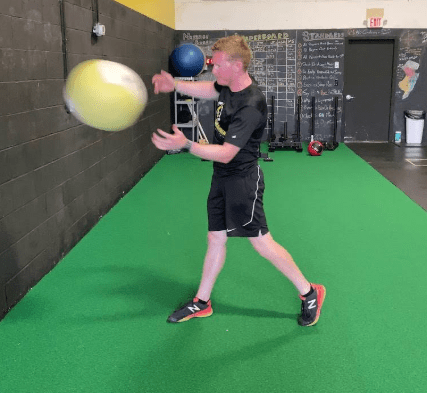
Med Ball Scoop Toss: Standing in an athletic position, engage core, rotate hips and shoulders together towards the wall. As you release the ball pivot the outside foot. ***Pivots should take place when rotation surpasses 45 degrees to protect the low back from twisting.
Don’t forget your glutes in this process with bridge variations, band walks, and step-ups. Healthy hips equal healthy knees and back! While the 6-pack abs are kitchen muscles, training your core in a safe and effective way will make most things in life that much easier, especially the more active you are.
 Happy Valley Wellness Solutions
Leave a comment